Work coaching through a physiological and emotional well-being lens, for clarity, regulation, and purpose-led careers.

Re-Anchor Wellbeing The Oxygen ROI: Why Your Next Career Move Should Be a Deep Breath
In the fast-paced, hybrid professional world of 2026, we often prioritize digital output over our most basic biological fuel: the 11,000 litres of air we breathe daily. This guide from Re-Anchor Wellbeing explores how reclaiming air quality, whether in a corporate office or a home 'Nature Nook' serves as a vital investment in your Cognitive Capital. Learn how to boost your productivity and mental clarity with science-backed strategies, including: The 40-Second Reset: Discover how simply looking at greenery can recharge your brain's "mental batteries" by shifting focus from direct to involuntary attention. The 'Sneeze-Free' Office: Identify inclusive, low-pollen plants like the Snake Plant or Areca Palm that scrub toxins and naturally humidify dry workspaces. The Cuttings Economy: Bridge the hybrid divide and foster team stewardship by swapping plant cuttings to build rapport and a sense of belonging. Practical Air Anchors: Implement simple rituals, such as diaphragmatic power breathing and the "damp cloth" cleaning method, to signal your nervous system to move from survival mode into focus mode. Stop viewing wellbeing as a corporate buzzword and start treating air as your most essential career resource. Blog post description.
Louisa Wade
3/28/20263 min read
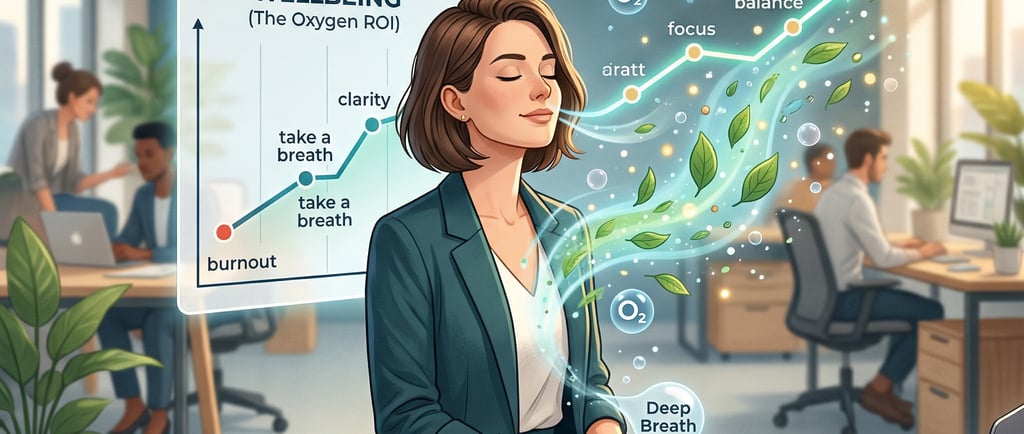
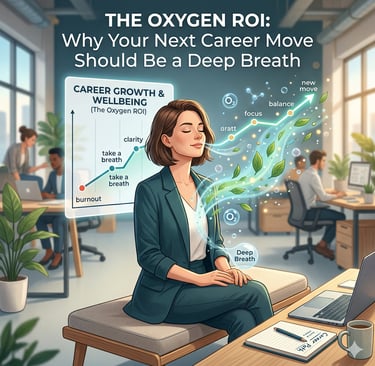
In the relentless tempo of the 2026 professional world, we often obsess over ‘productivity,’ ‘digital output,’ and ‘syncing.’ But we rarely consider the literal fuel for that output: the 11,000 litres of air we breathe every single day.
According to Maslow’s hierarchy of needs, air is our most primary physiological requirement. Whether you are in a glass-walled boardroom in the city or a repurposed spare-room in a hybrid setup, the quality of your air dictates the quality of your thinking. At Re-Anchor Wellbeing, I believe that ‘anchoring’ your health starts with reclaiming the quality of every breath, regardless of where you log on.
Understanding the Return on Investment (ROI) of Air
In business, Return on Investment (ROI) is a performance measure used to evaluate the efficiency of an investment. While usually financial, in the context of wellbeing, we measure it in Cognitive Capital.
When you invest in better indoor air, through ventilation and greenery, your Return on Investment includes:
Enhanced Decision-Making: A landmark study by the Harvard T.H. Chan School of Public Health found that cognitive scores were 61% higher in ‘Green’ building environments compared to conventional ones.
The ‘Sick Building’ Dividend: The Health and Safety Executive (HSE) provides guidance on ‘Sick Building Syndrome,’ noting that poor air quality leads to lethargy and headaches. Improving this directly reduces ‘presenteeism’, where staff are at their desks but not functioning.
Energy Preservation: Proper oxygenation prevents the 3:00 PM ‘slump.’ The Royal Horticultural Society (RHS) notes that plants can increase attention spans and reduce fatigue by up to 25%.
The Hybrid ‘Green Retreat’: Office vs. Home
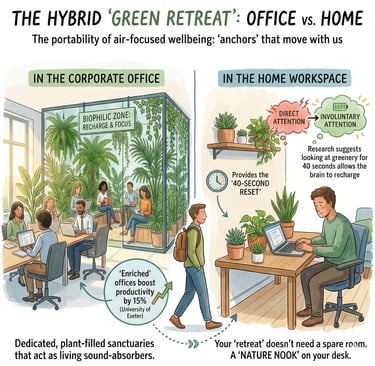
The beauty of an air-focused wellbeing strategy is its portability. In a hybrid world, we need ‘anchors’ that move with us.
In the Corporate Office
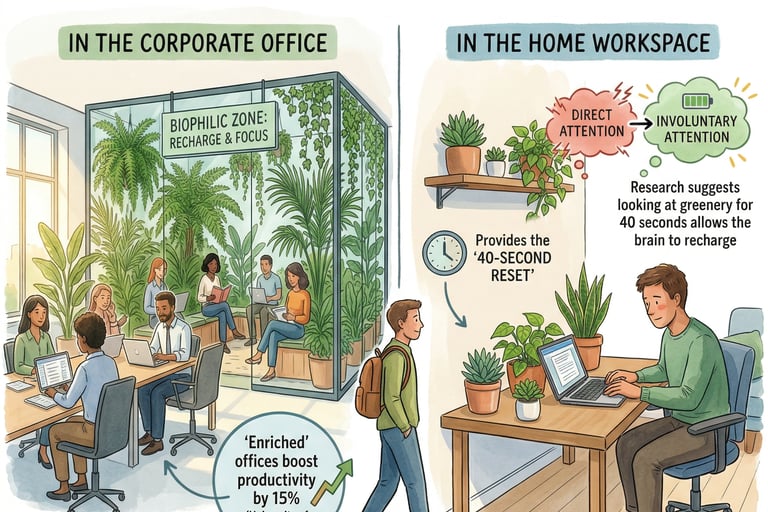
Forward-thinking companies are moving toward Biophilic Zones. These aren't just decorated lobbies; they are dedicated plant-filled sanctuaries that act as living sound-absorbers. A University of Exeter study famously found that ‘enriched’ offices make staff happier and boost productivity by 15%.
In the Home Workspace
For hybrid workers, your ‘retreat’ doesn't need a spare room. It can be a ‘Nature Nook’ on your desk. This provides the 40-second reset: research suggests that looking at greenery for just 40 seconds allows the brain to shift from ‘Direct Attention’ (which causes fatigue) to ‘Involuntary Attention,’ allowing your mental batteries to recharge.
Inclusivity: Designing for the ‘Sneeze-Free’ Professional
To ensure a green space is inclusive for everyone, particularly the 20% of the UK workforce with hay fever or asthma, we prioritise foliage over flowers.
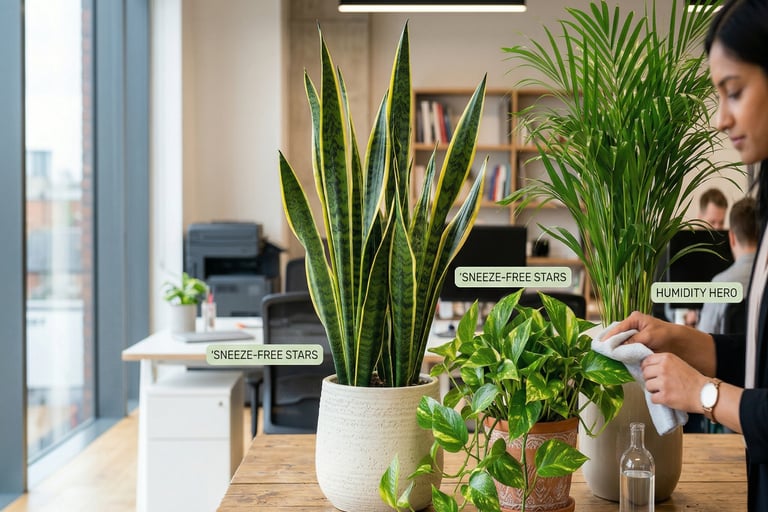
The Sneeze-Free Stars: Choose the Snake Plant or Pothos. They are virtually pollen-free and excel at ‘scrubbing’ toxins like benzene and formaldehyde.
The Humidity Hero: The Areca Palm acts as a natural humidifier. This is essential for dry UK offices and homes where central heating can irritate respiratory passages and skin.
Hygiene as Wellness: Dust is often a bigger trigger than the plant itself. Wiping leaves with a damp cloth every two weeks ensures the plant can photosynthesise effectively while keeping your air allergen-free.
The ‘Cuttings Economy’: Fostering Team Stewardship
One of the most powerful ways to bridge the gap between home and office is to encourage ‘Plant Stewardship.’
Psychological Ownership: When an employee brings a cutting from their home office into the HQ, they create a sense of belonging. They aren't just visiting an office; they are nurturing a piece of it.
Shared Growth: Swapping cuttings (like ‘babies’ from a Spider Plant) builds rapport across hybrid teams. It turns ‘sustainability’ from a corporate buzzword into a shared social value.
The Nurture Effect: UK Research and Innovation (UKRI) suggests that the act of nurturing a plant provides deeper mental health benefits than just looking at one. It provides a tactile, ‘analog’ break in a digital day.
Re-Anchoring Your Environment: 3 Practical Steps
Whether you’re a CEO or a freelancer, try these ‘Air Anchors’ this week:
The ‘Damp Cloth’ Ritual: Clean your plant's leaves. It’s a 2-minute mindfulness break that improves the plant’s health and your air quality.
Diaphragmatic ‘Power’ Breathing: Between back-to-back Teams or Zoom calls, take three ‘belly breaths.’ Inhale for 4 seconds, exhale for 6. This signals your nervous system to move from ‘survival mode’ into ‘focus mode.’
The Hybrid Exchange: If you’re heading into the office, bring a cutting for a colleague. It’s a zero-cost initiative that seeds a culture of care across the hybrid divide.
Conclusion: Breathing Life into Your Career
At Re-Anchor Wellbeing, I believe high performance is a byproduct of physiological safety. By treating air as a vital resource, you give your brain the clarity it needs to navigate professional life, whether you're working from the sofa or the boardroom.
Take a breath. Re-anchor. Begin again.