Work coaching through a physiological and emotional well-being lens, for clarity, regulation, and purpose-led careers.

Resource Hub
Find charities, support, and facts from A to Z with ease
FAQs
What is this?
A directory of charities, help, and fact sheets for easy access.
How to search?
Who can use it?
How often updated?
Can I suggest resources?
Use the A to Z search bar to quickly find resources.
Anyone looking for support, information, or charitable organizations can use this directory anytime.
We review and add new resources regularly to keep information current and helpful.
Yes, please contact us to recommend new organizations or fact sheets.
Contact Us


Reach out anytime for help, suggestions, or to add new resources.
Resources
Helpful links and support contacts.


Charity List
A carefully curated list of charitable organisations ready to offer support and guidance when you need it most.


Fact Sheets
Clear, concise fact sheets arranged alphabetically to help you quickly find the information you’re looking for.
The Vagus Nerve Reset
Vagus Nerve Reset - the most effective way to destress your Body!


DEFRA Air Information
https://uk-air.defra.gov.uk/ The UK-AIR website, managed by the Department for Environment, Food & Rural Affairs (Defra), is the UK’s primary resource for air quality monitoring and reporting.
Here is a brief overview of what it offers and why it is valuable:
What the Website Offers
Real-Time Data: It provides up-to-the-hour measurements of pollutants (such as Nitrogen Dioxide and Particulate Matter) from over 200 monitoring stations across the UK.
Air Pollution Forecasts: It delivers daily forecasts (produced with the Met Office) for the next five days, searchable by postcode or via an interactive map.
Daily Air Quality Index (DAQI): It uses a simple 1–10 scale (Low, Moderate, High, Very High) to explain air quality levels in a way that is easy for the public to understand.
Health Advice: The site provides specific medical guidance linked to the current pollution levels, advising users on whether they should adjust their outdoor activities.
Historical Records: It contains an extensive archive of air quality data, monitoring network descriptions, and scientific research papers.
Why This Information is Useful
Public Health: For individuals with underlying health conditions (like asthma or heart disease), the site acts as an early warning system to help them avoid exposure during "High" pollution spikes.
Daily Planning: It helps people decide when to exercise outdoors or choose cleaner routes for commuting and school runs.
Transparency and Compliance: It allows citizens to see if their local area meets national air quality standards and provides data that local authorities use to manage environmental policies.
Emergency Alerts: During rare periods of "Very High" pollution (smog episodes), the site issues alerts to ensure the public and healthcare providers are prepared.
Resource Directory
Working Minds
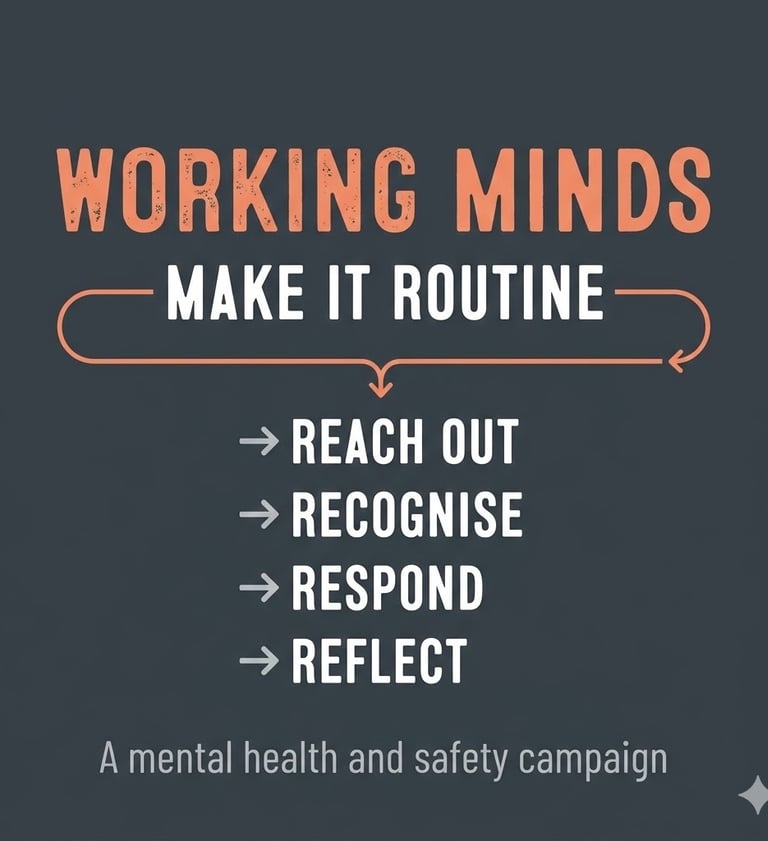
The Working Minds campaign is an initiative by the Health and Safety Executive (HSE), the UK’s national regulator for workplace health and safety.
Here is a brief overview of what it does, who it supports, and why it is valuable.
What the Organisation/Campaign Does
The primary goal of Working Minds is to prevent work-related stress and promote good mental health in the workplace. It provides a framework for employers to treat "psychological risks" with the same importance as physical safety risks.
The campaign simplifies this process through five key steps (the "5 Rs"):
Reach out: Start conversations with staff.
Recognise: Spot the early signs of stress (e.g., changes in behavior or performance).
Respond: Take action to reduce identified risks.
Reflect: Monitor whether the changes are actually helping.
Make it Routine: Ensure mental health checks are a permanent part of the business culture.
Who it Helps
Employers: Specifically small and medium-sized enterprises (SMEs), which may lack the HR resources of larger corporations. It helps them understand their legal duties and avoid the costs of high staff turnover.
Employees: It helps workers by fostering a safer, more open environment where they can discuss mental health without stigma, leading to better support and fewer "burnout" cases.
High-Risk Sectors: While relevant to all, it specifically targets industries with high stress rates, such as health and social care, education, and manufacturing.
Why This is Useful Information
Understanding the Working Minds campaign is useful for three main reasons:
Legal Compliance: Many employers do not realize that managing work-related stress is a legal requirement under health and safety law. This campaign provides the specific tools (like risk assessment templates) to stay compliant.
Economic Impact: Poor mental health costs UK employers billions annually due to sickness absence and lost productivity. Following this guidance is "good for business" as it increases efficiency and staff retention.
Practical Tools: Rather than just providing theory, the site offers "Talking Toolkits," free online learning, and posters that any manager can use immediately to start improving their workplace culture.
Money and Pensions Service
This website belongs to the Money and Pensions Service (MaPS), an "arm’s-length" body sponsored by the UK Government’s Department for Work and Pensions. Specifically, the page linked focuses on Financial Wellbeing in the Workplace.
Here is a breakdown of what the site is about, who it helps, and why it is important:
1. What is this website about?
The website is a resource hub designed to help employers integrate financial support into their organisations. MaPS defines financial wellbeing as "feeling secure and in control" of your money. The site provides:
Practical Tools: Resources like payroll-deducted savings schemes and "Talk Money" toolkits.
Guidance: Evidence-based research and "best practice" guides for HR professionals and business leaders.
Partnerships: Access to local partnership managers who offer free, bespoke support to help businesses build a financial wellbeing strategy.
2. Who do they help?
While the primary users of this specific page are employers, HR managers, and business owners, the ultimate beneficiaries are:
Employees: Especially those who may be struggling with debt, lack of savings, or confusion about their pensions.
Vulnerable Workers: MaPS focuses heavily on those "most in need," such as people on low incomes or those with low financial confidence.
Young People & Apprentices: The site offers specific resources to help younger workers build "financial foundations" early in their careers.
3. Why is this useful for people to know about?
Knowing about this resource is valuable for several reasons:
For Employees: It is a gateway to MoneyHelper, a consumer-facing service that provides free, impartial, and government-backed advice on debt, pensions, and daily money management. It’s a safe alternative to "fin-fluencers" or high-cost commercial advice.
For Employers: Financial stress is a leading cause of employee absence and low productivity. This site provides a free way for businesses to support their staff’s mental health and financial stability without needing to hire expensive private consultants.
Mental Health Link: There is a proven link between money worries and mental health issues. By promoting financial wellbeing, this site helps address the "root cause" of stress for millions of people.
Cost-of-Living Support: During periods of economic inflation, having a central, trusted source for "what to do when things go wrong" (like the Breathing Space debt scheme) can be a literal lifesaver.