Work coaching through a physiological and emotional well-being lens, for clarity, regulation, and purpose-led careers.

Navigating Respiratory Challenges in the UK Workplace
Explore the intersection of health and professional life, focusing on respiratory conditions like asthma, COPD, and pneumonia. Discover actionable strategies, legal rights, and tools to foster a supportive work environment for better workplace health.
Louisa Wade
4/4/20268 min read

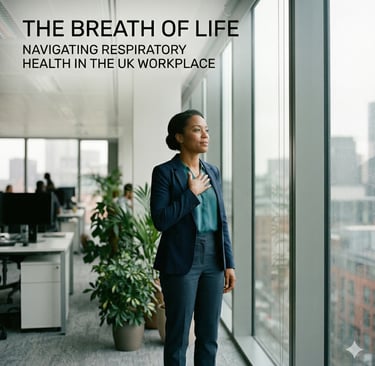
In our fast-paced professional lives, we often take the most basic biological baseline for granted: the ability to breathe effortlessly. Yet, for millions in the UK, breathing is not a given; it is a conscious and sometimes exhausting effort that dictates every hour of their day.
While the spectrum of pulmonary health is vast, encompassing dozens of rare and chronic disorders, for this blog, I am going to explore the top three conditions most frequently treated by the NHS. However, it is important to recognise that, irrespective of a specific diagnosis, the principles we will discuss apply to almost any health challenge. Whether you are navigating a respiratory issue or another long-term condition, the impact on your life and work remains universal.
Whether you are a small business owner responsible for your team’s environment or a working professional managing a personal diagnosis, understanding the ‘true cost’ of respiratory health is essential for long-term well-being and productivity.
Why Focus on ‘Top Three’?
While every individual's journey is unique, the most common respiratory conditions in the UK provide a clear lens through which we can view the broader intersection of health and professional life:
Asthma: According to NHS England, asthma is a significant burden on the healthcare system, accounting for 2% to 3% of all primary care appointments in the country.
Source: https://www.england.nhs.uk/long-read/rightcare-asthma-scenario/
Scale of Impact: In addition to primary care visits, the condition leads to approximately 60,000 hospital admissions and 200,000 bed days annually in the UK.
Workplace Relevance: The same report notes that 9–15% of adult-onset asthma is ‘occupational asthma,’ often caused by exposure to dust, fumes, or chemicals in the workplace.
Prevalence: It confirms that roughly 1 in 12 adults (4.3 million) and 1 in 11 children receive treatment for asthma in the UK.
COPD (Chronic Obstructive Pulmonary Disease): A leading cause of disability that demands significant lifestyle and pacing adjustments.
Pneumonia/Lower Respiratory Infections: Acute conditions that test the resilience of both the individual and the business's sick-pay structures.
The Universal Rule: Managing a health condition isn't just a medical task; it’s a logistical and emotional one. The strategies used to maintain productivity while managing breathlessness are the same strategies used to thrive with any chronic illness: adaptation, awareness, and proactive support.
The Big Three: UK Respiratory Realities in 2026
As of 2026, three primary conditions dominate the UK health landscape, costing the NHS an estimated £11 billion annually:
Pneumonia
The leading cause of emergency admissions often follows viral ‘hits’ like the flu.
Hospital admission can cost between £1,700 and £5,000.
Asthma
Most common chronic conditions; triggers include office dust or strong perfumes.
Costs the NHS £3 billion/year, often due to poorly managed primary care.
COPD
A progressive condition (including emphysema) causing permanent airflow blockage.
A primary driver of ‘winter pressures’ in the NHS.
Why Our Lungs Struggle: The Root Causes
Respiratory health is rarely a single factor; it is a complex intersection of biology, lifestyle, and environment.
The Genetic Blueprint: Resilience isn't just about lifestyle; it is often coded in our DNA. A family history of atopy, the genetic predisposition to develop allergic hypersensitivity, means some individuals are significantly more susceptible to asthma and inflammation. For these professionals, their genetic makeup dictates how aggressively their lungs react to external irritants.
The Indoor Threat: We often worry about ‘city smog’ but damp, mold, and Volatile Organic Compounds (VOCs) from cleaning products or office furnishings are major internal triggers. For those with genetic sensitivity, these indoor pollutants can lead to chronic ‘occupational asthma’ and decreased productivity.
The Vaping & Smoke Factor: Tobacco remains the leading preventable cause of lung disease. While vaping is often used as a cessation tool, the rise of unregulated products has introduced new risks of acute lung injury and chronic airway inflammation, the long-term impacts of which are still being mapped by the NHS.
The Immunity Gap: Following the pandemic, the ‘immunity gap’ has led to a significant rebound in RSV, flu, and Whooping Cough. These infections can quickly progress to life-threatening pneumonia, particularly for vulnerable professionals whose immune systems may not have been "primed" by recent exposure.
UK Resources for Further Reading
Genetics and Atopy: Asthma + Lung UK: What is Asthma?
Indoor Air Quality: NICE Guidance: Indoor Air Quality at Home and Work
Vaping Facts vs. Myths: Cancer Research UK: Does Vaping Cause Popcorn Lung?
Occupational Management: HSE: Asthma in the Workplace
Building Resilience: Free & Accessible Self-Help
Self-care isn't a one-size-fits-all prescription; it is a diverse toolkit that looks different for everyone. While clinical intervention is vital, there are many proactive, non-medical ways to support your body and mind. You don’t always need a prescription to reclaim control over your physiological needs.
By integrating small, intentional habits into your daily routine, you can significantly reduce the ‘biological tax’ that chronic conditions, respiratory or otherwise, place on your professional performance. Here are some examples.
The Nutritional Shield
Vitamin D: Because the UK lacks sunlight from October to March, the NHS recommends a daily 10 microgram (400 IU) supplement to help produce antimicrobial peptides that kill lung bacteria.
Vitamin C: Protects lung tissue from ‘oxidative stress’ caused by pollution. Beyond citrus, red peppers, and even potatoes are excellent sources.
The ‘Mediterranean’ Approach: Diets high in fruit, veg, and whole grains are proven to improve lung function in those with COPD and asthma.
Environmental Awareness
Monitor Air Quality: Use free tools like the Defra UK-AIR site to plan commutes around high-pollution triggers.
Level Up Your Wellness Journey
Tracking your habits is one of the most effective ways to bridge the gap between intention and results. Whether you're monitoring nutrition, sleep patterns, or mental clarity, putting pen to paper creates a level of accountability that digital apps often miss.
To help you stay on track, I’ve curated a Health & Wellness Journal available directly on Amazon. It’s designed specifically to help you visualize your progress and identify the patterns that lead to your best self while navigating health appointments and treatments.
Why Use a Physical Health Journal?
Mindfulness: The act of writing forces you to slow down and reflect on your daily choices.
Pattern Recognition: Easily spot how certain foods or activities correlate with your energy levels.
Goal Clarity: Keep your "why" front and center every single morning.
Screen-Free Time: Give your eyes a break from blue light while focusing on your personal growth.
Medical Assessments: This provides valuable information for medical assessors when applying for disability benefits or medical insurance claims.
Support This Content
Full Disclosure: As an Amazon Associate, I earn from qualifying purchases. If you decide to pick up a journal through the link below, I may receive a small commission at no extra cost to you. These commissions are a huge help in keeping this site running and allow me to continue providing high-quality health content for free. Thank you for your support!
Check out the Health Journal on Amazon https://amzn.to/4s5ru7g
Check out the Health Journal on Amazon https://amzn.to/4dUv54E
Check out the Health Journal on Amazon https://amzn.to/4s6BhKA
How many days a week do you currently track your health metrics, and what’s the biggest challenge you face in staying consistent?
Air Quality Monitors: Based on recent expert reviews and performance data for 2026, here are the top-rated air quality monitors available on Amazon UK, categorized by budget and capabilities.
Note: As an Amazon Associate, Re-Anchor Wellbeing earns qualifying purchases made through links in this post.
Top-Rated Air Quality Monitors (2026 Rankings)
Budget
Amazon Smart Air Quality Monitor
Works with Alexa; tracks PM2.5, VOCs, CO, humidity, and temperature.
£50–£70
Mid-Range
Qingping Air Monitor Lite
E-ink display; tracks CO2, PM2.5, PM10, temperature, and humidity.
£70–£100
Aranet4 Home
Highly accurate NDIR CO2 sensor; ultra-portable with 2-year battery life.
£150–£190
Deluxe
Airthings View Plus
Includes Radon detection; 2.9" e-paper display; tracks 7 key pollutants.
£250–£270
1. Budget: Amazon Smart Air Quality Monitor
This is widely considered the best affordable entry point, especially for Alexa-enabled households.
Pros: Seamless smart home integration and easy-to-read LED indicators (Green/Yellow/Red).
Cons: No built-in screen requires the Alexa app to view specific numerical data.
Star Rating Insight: Typically maintains high ratings (approx. 4.3/5) for its ease of use and low barrier to entry.
2. Mid-Range: Qingping Air Monitor Lite & Aranet4 Home
These devices bridge the gap between basic sensors and professional-grade accuracy.
Qingping Lite: Praised for its sleek design and ‘Best Value’ for most people. It uses high-quality sensors often found in more expensive units.
Aranet4 Home: The gold standard for CO2 monitoring. It is highly recommended for schools and offices to monitor ventilation levels.
Star Rating Insight: The Aranet4 often secures the highest marks for reliability, frequently reaching 4.7/5.
3. Deluxe: Airthings View Plus
The ‘View Plus’ is the most comprehensive consumer monitor on the market.
Unique Strength: It is one of the few consumer devices that accurately monitor Radon gas, a significant long-term health risk in many UK homes.
Features: Customizable e-paper display and a ‘wave’ feature for instant air quality checks without opening an app.
Star Rating Insight: Despite its high price, it maintains a strong rating (approx. 4.5/5) due to its deep analytics and smart home compatibility.
Transparency Note: As an Amazon Associate, Re-Anchor Wellbeing may earn a small commission from qualifying purchases made through the links provided above. This helps us continue providing free health advocacy tools for the UK workforce.
The Professional Edge: Rights and Adjustments
Under the Equality Act 2010, you are considered disabled if a respiratory condition has a ‘substantial’ and ‘long-term’ negative effect on daily activities.
For Business Owners & Employers: You have a legal duty to provide Reasonable Adjustments. These are not ‘special treatment’ but rather the removal of barriers to performance. Examples include:
Environmental: Installing HEPA air filters or moving a desk away from high-traffic, dusty areas.
As we navigate the respiratory challenges of 2026, maintaining clean indoor air is a vital "physiological safety" strategy for any UK professional. Whether you are a small business owner looking to protect your team or an individual managing a condition like asthma, choosing the right HEPA (High-Efficiency Particulate Air) filter can significantly reduce triggers like dust, mold, and fine pollution.
Below are the top-rated HEPA air purifiers currently available on Amazon UK, categorized by price point and performance.
2026 Top-Rated HEPA Air Purifiers on Amazon UK
Note: As an Amazon Associate, Re-Anchor Wellbeing earns qualifying purchases made through links in this post.
Budget
Coway Airmega 50
Small rooms & office nooks.
£80
Rated 4.5/5
Mid-Range
Levoit Core 400S
Large rooms & smart automation.
£220
Rated 4.6/5
Deluxe
Dyson Purifier Cool TP09
Large spaces & formaldehyde removal.
£450+
Rated 4.3/5
1. Budget: Coway Airmega 50 / 100
For those seeking an affordable entry point, Coway remains a ‘perfect budget option’ in 2016.
Key Features: Uses a three-stage filtration system including a True HEPA filter and an activated carbon filter for odors.
Performance: In tests, it improved air quality by approximately 93% in standard-sized rooms.
Star Rating Insight: Consistently rated high (approx. 4.5/5) for being a reliable, ‘no-frills’ solution that delivers clinical-grade results without the high price tag.
2. Mid-Range: Levoit Core 400S
Voted the ‘Best Overall’ air purifier for 2026, this unit balances advanced features with an accessible price.
Key Features: Features a laser particle sensor that automatically adjusts fan speed in real-time based on-air quality.
Smart Integration: Fully compatible with Alexa and the VeSync app, allowing professionals to monitor office air quality remotely.
Star Rating Insight: Boasts a strong 4.6/5 rating from thousands of users who praise its quiet "Sleep Mode" and responsive auto-cleaning.
3. Deluxe: Dyson Purifier Cool TP09 (Formaldehyde)
When budget is less of a concern and design is a priority, Dyson’s top-tier models offer comprehensive environmental control.
Key Features: Beyond a standard HEPA H13 filter, it specifically targets formaldehyde—a common VOC found in furniture and office materials.
Design: Functions as both a powerful oscillating fan and a fully sealed HEPA purifier, ensuring that dirty air isn't leaked back into the room.
Star Rating Insight: While expensive, it maintains a 4.3/5 rating due to its high-tech LCD display that provides real-time pollutant reports.
Transparency Note: As an Amazon Associate, Re-Anchor Wellbeing may earn a small commission from qualifying purchases made through the links provided above. This helps us continue providing free health advocacy tools for the UK workforce.
Flexible Working: Allowing remote work on high-pollution days or during winter flu peaks. There is useful information available at:
https://www.acas.org.uk/acas-code-of-practice-on-flexible-working-requests/html
Pacing: Allowing extra breaks for inhaler use or catching one's breath.
For Employees: Don’t fear disclosure. Disclosing your condition is a strategic move that unlocks your ‘legal safety net.’ You only need to explain how the condition affects your work, not your entire medical history.
UK Resources
Clinical Advice: NHS Guide to Vitamins
Support Groups: Find a "Breathe Easy" Group
Legal Rights: ACAS: Requesting Reasonable Adjustments
Financial Support: Access to Work (GOV.UK) — A grant for practical support or specialised equipment.
NHS England: RightCare asthma scenario